
A home-defense AR-15 has one job: work perfectly, in the dark, under stress, with zero fuss. That means the setup philosophy is different from a range toy or a hunting rifle. Every addition should earn its place. Here’s what actually matters.
Reliability first, everything else second
This isn’t the rifle to experiment on. Proven components, properly installed, tested with your defensive ammunition. If you haven’t run at least a few hundred rounds through your home-defense setup, it’s not a home-defense setup yet — it’s a project.
The essentials
A weapon light. Non-negotiable. You must identify what you’re pointing at before you decide anything else. A simple, bright white light with momentary activation. This is the single most important accessory on a defensive rifle.
A sling. You may need both hands — for doors, family members, a phone. A two-point adjustable sling keeps the rifle with you and out of the way.
Reliable magazines. Quality mags, tested, loaded with quality defensive ammunition. Rotate them periodically.
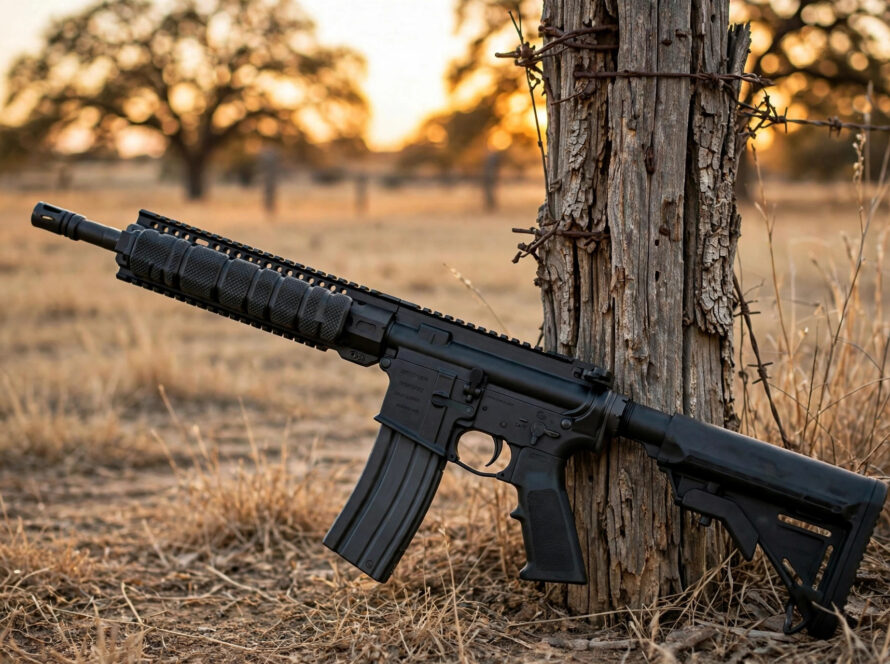
Rail covers on the grip zone. In a high-stress situation you’re grabbing the rifle hard and fast — possibly with sweaty hands, possibly in the dark. Bare M-LOK slots are sharp and slick. Textured rail covers give you a consistent, comfortable grip no matter the conditions. It’s a small upgrade with an outsized payoff when it counts.
What you can skip
Excessive weight. Every ounce matters when you’re moving through a house. If an accessory doesn’t serve the mission, it stays in the safe.
Complicated optics. A simple red dot with a long battery life, or quality iron sights you trust. Save the magnified precision glass for the range.
Noise and flash. A muzzle device that tames flash helps preserve your night vision. (Suppressors are a separate conversation — check current regulations.)
Caliber marking matters here too
If you keep multiple uppers or rifles staged, caliber ID becomes a safety issue, not a cosmetic one. In the dark, under stress, you don’t want to wonder what’s chambered. Caliber ID plates mark every rifle permanently — one less thing to think about when thinking is hard.
Train with the setup
The best home-defense rifle is the one you’ve trained with. Dry-fire practice, low-light practice, moving through your own home (with a cleared rifle) to learn angles and distances. Gear helps; training decides.
Texas notes
Texas law is generally favorable to home defense, but laws change and specifics matter — this isn’t legal advice. Know the law as it stands today, not as it stood five years ago, and consider professional training from a reputable Texas instructor.
Build it simple, build it reliable, train with it often. Start with the grip — it’s the part of the rifle you’ll touch first.